Are hyperbaric oxygen therapy chambers worth it for recovery and longevity?
TL;DR
Hyperbaric oxygen therapy (HBOT) has strong evidence for a short list of medical conditions — decompression sickness, carbon monoxide poisoning, non-healing diabetic wounds, and radiation injury — where the FDA and Undersea and Hyperbaric Medical Society both back it. For muscle recovery, general "anti-aging," or longevity in healthy people, the evidence is much weaker: a handful of small trials show modest or null effects on soreness and performance, and there's no human trial showing it extends lifespan. If you're doing it for a cleared medical diagnosis, it's well established. If you're doing it three times a week at a wellness clinic hoping to recover faster or live longer, you're paying for a "promising but under-studied" bet, not a proven one.
How is hyperbaric oxygen therapy supposed to work?
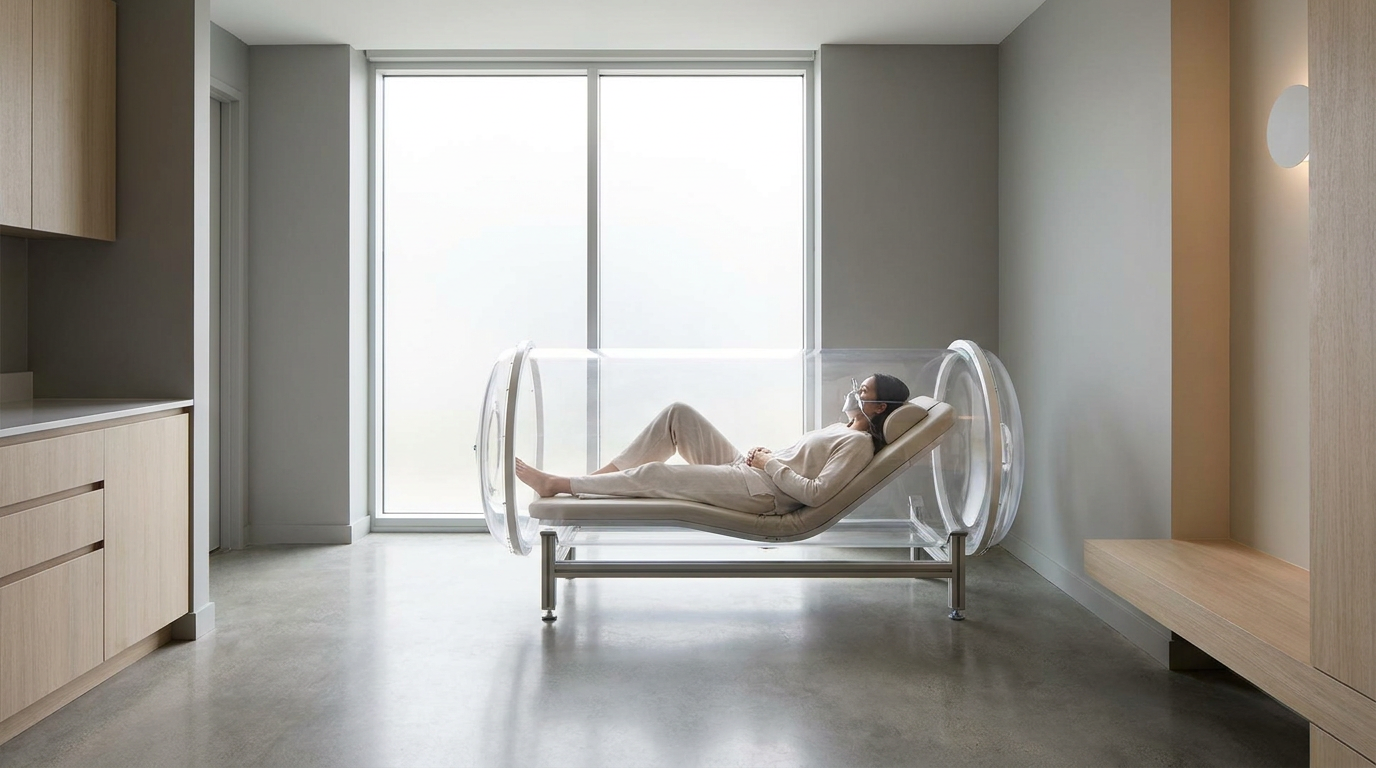
You sit or lie in a pressurized chamber breathing 100% oxygen at pressures above sea level — typically 1.5 to 3 atmospheres absolute (ATA). The pressure forces far more oxygen to dissolve directly into your blood plasma, not just bind to hemoglobin, which lets oxygen reach tissue that's poorly perfused or swollen. That's the mechanism behind its approved uses: it helps oxygen-starved tissue in a diabetic foot ulcer or a radiation-damaged bowel actually heal. The National Institutes of Health's MedlinePlus and the FDA both describe this oxygen-delivery mechanism clearly, and it's not controversial — the argument is about which conditions actually benefit from it.
The recovery and longevity pitch extends this logic: if more oxygen helps damaged tissue heal in a wound, maybe it helps microdamaged muscle after a hard workout, or reduces the low-grade inflammation associated with aging. That's a plausible hypothesis. It is not the same thing as a demonstrated effect.
What does the research actually show for athletic recovery?
The trial base here is small and mixed. A frequently cited systematic review by Barata et al. (2011) in Sports Medicine looking at HBOT for exercise-induced muscle injury found inconsistent results across the available trials — some showed reduced soreness or faster strength recovery, others showed no difference from breathing normal air in a pressurized chamber (the standard placebo control). A more recent Cochrane-style analysis of HBOT for delayed-onset muscle soreness found the same pattern: underpowered studies, inconsistent protocols (pressure, duration, timing all vary), and no clear consensus effect size. When effects do show up, they tend to be modest — think slightly less reported soreness, not dramatically faster return to play. Nothing in the literature supports HBOT as a substitute for sleep, protein, and progressive training load management, which remain the interventions with the biggest recovery effect sizes by far.
Is there any evidence for longevity or anti-aging claims?
This is where the claims run furthest ahead of the data. The study most commonly cited by longevity-focused HBOT marketing is Hachmo et al. (2020) in Aging, an Israeli trial that found HBOT sessions in healthy older adults lengthened telomeres and reduced the proportion of senescent cells in blood samples. That's a genuinely interesting mechanistic finding — but it's one small trial (35 participants), it measured cellular biomarkers, not lifespan or even hard clinical outcomes like disease incidence, and it hasn't been replicated at scale. Biomarker changes are not the same as living longer or better, and the study's own authors describe the findings as requiring further research, not a settled result. No human trial has shown HBOT extends lifespan or reduces all-cause mortality, and treating a telomere biomarker study as proof of anti-aging effect is a bigger leap than the data supports.
Are there risks or downsides?
HBOT is generally safe when administered by trained staff in a medical-grade chamber, but it isn't nothing. The most common side effect is barotrauma to the ears and sinuses from pressure changes — similar to what you'd feel on an airplane, sometimes worse. Oxygen toxicity seizures are rare but documented at higher pressures and longer durations, and temporary myopia (blurred vision) can occur with repeated sessions. Home and "soft" hyperbaric chambers sold direct-to-consumer typically run at lower pressures (around 1.3 ATA) than the medical-grade chambers used in the actual trials, which means the modest effects seen in clinical research may not even transfer to the device someone is using in their living room. The FDA has specifically warned about hyperbaric chambers marketed for unapproved uses, including anti-aging and general wellness, because the pressure and oxygen delivery in these consumer units aren't standardized the way medical chambers are.
FAQ
Q: Is HBOT worth it if I just want faster muscle recovery after training?
A: The evidence is inconsistent at best. If you have access to it and money isn't a constraint, it's unlikely to hurt, but don't expect it to outperform sleep, adequate protein, and smart training load — those have far stronger evidence for recovery.
Q: Does HBOT actually reverse aging at the cellular level?
A: One small trial (Hachmo et al., 2020) found changes in telomere length and senescent cell counts in older adults after HBOT sessions. That's a real, published finding, but it's a biomarker study, not proof of slower aging or longer life, and it needs replication before it should change anyone's health decisions.
Q: Are home hyperbaric chambers as effective as the clinical ones used in studies?
A: Probably not directly comparable. Most consumer "soft chambers" run at lower pressure than the hospital-grade chambers used in most trials, so even the modest effects found in research may not carry over.
Q: What conditions is HBOT actually approved to treat?
A: FDA-cleared uses include decompression sickness, carbon monoxide poisoning, certain non-healing diabetic and pressure wounds, gas gangrene, and radiation tissue injury, among a short list of others. General wellness, recovery, and anti-aging are not on that list.
Sources
- Hachmo Y, et al. "Hyperbaric oxygen therapy increases telomere length and decreases immunosenescence in isolated blood cells: a prospective trial." Aging (Albany NY), 2020.
- Barata P, et al. "Hyperbaric oxygen effects on sports injuries." Sports Medicine, 2011.
- FDA: Hyperbaric Oxygen Therapy — Don't Be Misled.
- MedlinePlus (NIH): Hyperbaric oxygen therapy.
Medical Disclaimer
This content is for informational purposes only and is not a substitute for professional medical advice, diagnosis, or treatment. Always consult a qualified healthcare provider before making any health-related decisions or using any treatments discussed herein, including hyperbaric oxygen therapy. Results vary by individual.
of Stuff
The evidence, in your inbox. No sponsored placements inside a verdict, ever.