Do microbiome skincare serums actually work?
TL;DR
Microbiome skincare serums are built on a real and interesting premise — your skin does host a distinct bacterial community, and disrupting it is linked to conditions like eczema and acne. But most serums marketed as containing "live probiotics" can't actually keep bacteria alive in a bottle for the length of a normal shelf life, and even the postbiotic/prebiotic versions (which sidestep that problem by using bacterial fragments or "food" for existing microbes) have only small, short, often industry-funded human trials behind them. Call this one promising but under-studied: plausible mechanism, thin independent evidence, no products yet with the kind of trial data you'd want before believing the marketing.
What is the "skin microbiome" and why would bacteria in a serum matter?
Your skin carries its own ecosystem of bacteria, fungi, and viruses — dominated by genera like Cutibacterium, Staphylococcus, and Corynebacterium — that varies by body site, age, and even geography. The foundational mapping work here is the NIH Human Microbiome Project, which catalogued just how site-specific and person-specific this community is (Grice et al., 2009, Science). Later work by the same group showed skin microbial communities are also fairly stable over time in healthy people (Oh et al., 2012).
The theory behind microbiome serums is that disrupting this balance — through over-cleansing, harsh actives, antibiotics, or just aging — contributes to conditions like acne, rosacea, and eczema, and that adding the "right" bacteria, their fragments, or food for them back onto skin could restore some protective function. That's not a fringe idea. Studies have repeatedly found altered microbial diversity in atopic dermatitis patients compared with healthy skin (Kong et al., 2012, Genome Research), with Staphylococcus aureus overgrowth tracking with flare severity. So the mechanism isn't invented — the leap is assuming a jar of serum can meaningfully correct it.
Can live bacteria actually survive in a bottle of serum?
This is the part most marketing copy glosses over. Bacteria used in skincare — often Lactobacillus or Bifidobacterium strains borrowed from the gut-probiotic world, or skin-native strains like Nitrosomonas eutropha — need moisture, the right pH, and often refrigeration to stay viable. A serum sitting in a shipping container, then a warehouse, then your bathroom shelf for 12–24 months is a hostile environment for a living organism. Preservative systems (which most formulas need to prevent contamination by unwanted microbes) are themselves often antimicrobial, which is a little bit of a formulation paradox: the ingredients that keep the product safe to use tend to kill the thing you're paying for.
This is why most "microbiome-friendly" products on shelves right now aren't actually probiotic (live organisms) at all — they're prebiotic (ingredients meant to feed your existing good bacteria, like certain oat or inulin derivatives) or postbiotic (inactivated bacteria, lysates, or their metabolic byproducts, like ferments). Postbiotics dodge the survival problem entirely because nothing needs to stay alive — but that also means any claim about "restoring your microbiome's balance" through live colonization doesn't apply to them. They're really acting more like a topical ingredient with some anti-inflammatory or barrier-support signaling, not a living transplant.
What does the actual research show?
Human trial data here is genuinely thin. A frequently-cited pilot study looked at a lotion containing live Nitrosomonas eutropha and found modest improvements in skin appearance measures over four weeks, but it was small, uncontrolled in key ways, and tied to the company developing the product (AOBiome) rather than an independent academic group. A more rigorous, independent line of work comes from topical ferment/postbiotic research: a randomized trial of a Lactobacillus-fermented lysate in adults with mild-to-moderate acne found reductions in lesion count over 12 weeks compared to vehicle (Fabbrocini et al., 2021), which is a reasonable signal — but it's one trial, with a few dozen participants, not a body of replicated evidence.
For eczema, transplant-style approaches using live bacterial strains (rather than commercial serums) have shown more compelling results in small NIH-run trials — for example, topical application of Roseomonas mucosa isolated from healthy skin improved eczema severity scores in both adult and pediatric pilot studies (Myles et al., 2018, JCI Insight). That's genuinely exciting work, but it was done under controlled clinical conditions with a specific isolated strain — not something you're buying at Sephora.
Put together: there's real science behind the concept, a couple of promising small trials, and a large gap between "this specific bacterial strain, applied under trial conditions, did something measurable" and "this commercial serum with a marketing-friendly probiotic label will meaningfully shift your skin's ecosystem."
Are there risks or downsides to trying one?
The safety profile is generally reassuring — these products aren't associated with serious adverse events in the trials that exist, and postbiotic/prebiotic formulas behave similarly to other gentle serums. The bigger risk is financial and expectational: paying a premium for "probiotic" claims on a product that, chemically, can't have kept its bacteria alive, or expecting a barrier-repair-level result from an ingredient category with essentially no long-term, independent, placebo-controlled human data. If you have an active skin condition like eczema or rosacea, layering in a new fermented or bacterial-derived product without checking with a dermatologist first is the more relevant caution than the microbiome angle itself.
What we'd actually reach for
Consistent with the verdict above, these lean on pre- and postbiotics — supporting the flora you already have — rather than betting on live bacteria surviving in a bottle. Editorial picks, chosen to fit that criterion.
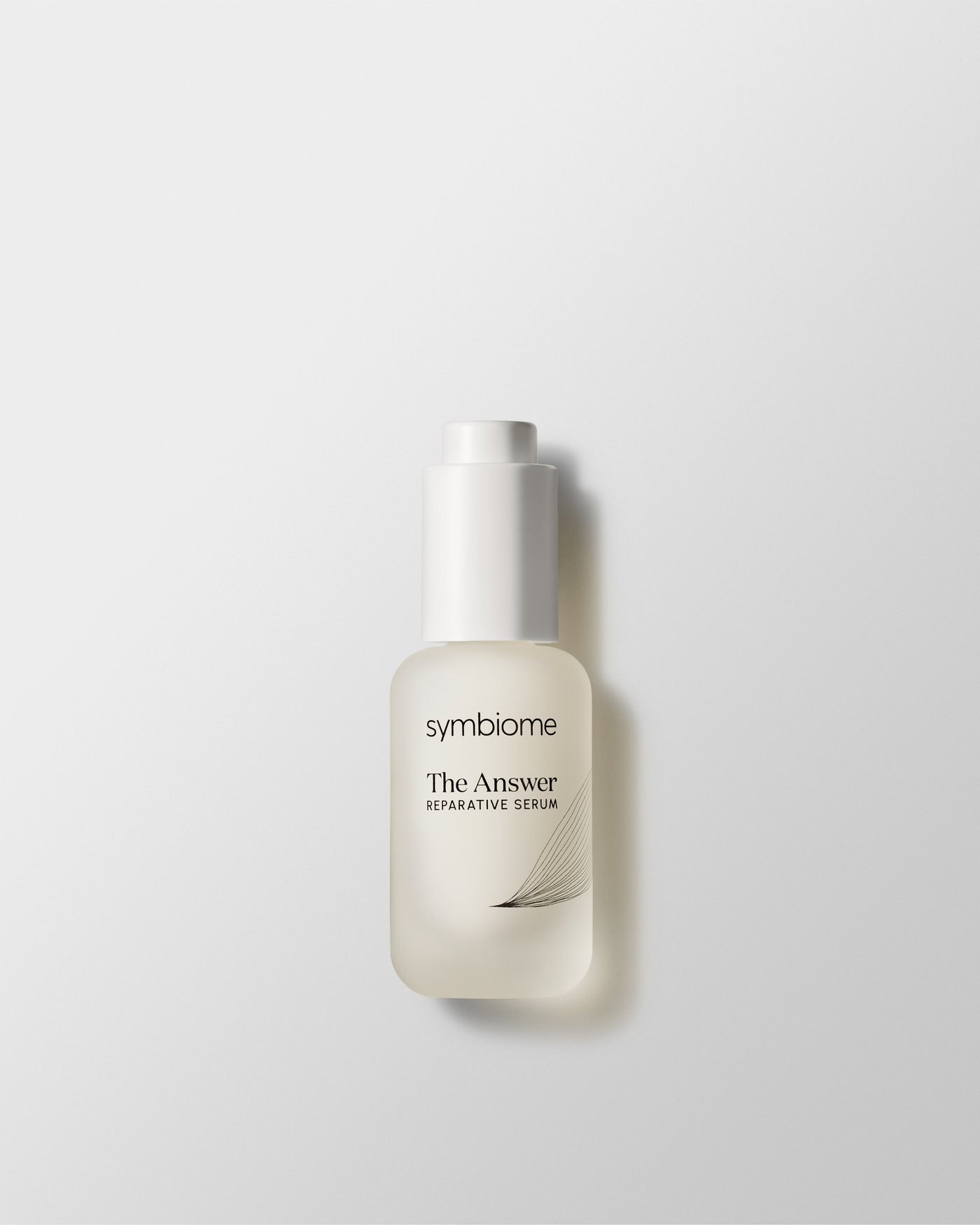
Symbiome — The Answer Reparative Serum
Symbiome's flagship is built on a postbiotic Lactobacillus ferment plus rainforest-derived botanicals, manufactured cold to keep the actives intact. It's the pre/postbiotic approach our verdict favours over live-culture claims — nothing has to be alive in the bottle, because the formula doesn't rely on it. ($200, symbiome.com)
Gallinée
One of the original pre-, pro- and postbiotic skincare lines. Its formulas are built around feeding the flora you already have — lactic acid, prebiotics, a postbiotic ferment — rather than adding live cultures. (gallinee.com)
Vintner's Daughter — Active Botanical Serum
Not a microbiome product — it's a cold-pressed botanical face oil — but a genuinely well-made, barrier-supportive serum, included for readers who care more about a healthy barrier than a microbiome claim. (vintnersdaughter.com)
FAQ
Q: If a serum says "live probiotics" on the label, is that true?
A: Be skeptical. Keeping bacteria alive and viable through manufacturing, shipping, and 12+ months on a shelf without refrigeration is chemically difficult, and most formulations include preservatives that work against bacterial survival. Many "probiotic" labels are legally accurate at the moment of manufacture but don't reflect what's actually alive by the time it reaches you.
Q: What's the difference between probiotic, prebiotic, and postbiotic skincare?
A: Probiotic means live organisms (rare and fragile in a bottle). Prebiotic means ingredients that feed your skin's existing bacteria. Postbiotic means inactivated bacteria, fragments, or their byproducts — no live organisms required, which is why most shelf-stable "microbiome" products fall into this category.
Q: Should I try a microbiome serum for my acne or eczema?
A: It's reasonable to try one as a low-risk addition to a routine, given the modest positive signal in trials like Fabbrocini et al. (2021) for acne, but don't substitute it for treatments with stronger evidence (like topical retinoids or, for eczema, prescribed emollients and anti-inflammatories) without talking to a dermatologist.
Q: Is this the same as taking a probiotic supplement for skin health?
A: No — oral probiotics work through a completely different route (gut-skin axis) with its own separate, similarly early evidence base. Topical microbiome products act locally on the skin surface, not through digestion.
Sources
- Grice EA, et al. "Topographical and Temporal Diversity of the Human Skin Microbiome." Science, 2009.
- Kong HH, et al. "Temporal shifts in the skin microbiome associated with disease flares and treatment in atopic dermatitis." Genome Research, 2012.
- Myles IA, et al. "First-in-human topical microbiome transplantation with Roseomonas mucosa for atopic dermatitis." JCI Insight, 2018.
- Fabbrocini G, et al. "Study on Lactobacillus fermented lysate in mild-to-moderate acne." J Cosmet Dermatol, 2021.
Medical Disclaimer
This content is for informational purposes only and is not a substitute for professional medical advice, diagnosis, or treatment. Always consult a qualified healthcare provider before making any health-related decisions or using any treatments discussed herein. Results vary by individual.
of Stuff
The evidence, in your inbox. No sponsored placements inside a verdict, ever.