Does EBOO (extracorporeal blood oxygenation and ozonation) actually do anything?
TL;DR
EBOO (extracorporeal blood oxygenation and ozonation) runs a patient's blood through an external circuit, exposes it to a mix of ozone and oxygen gas, then returns it to the body — essentially a souped-up version of major autohemotherapy that processes far more blood per session. The mechanistic case for ozone's effect on blood (lipid peroxidation triggering an antioxidant response, mild oxidative stress hormesis) has some basic-science support. But controlled human trials of EBOO specifically — as opposed to ozone therapy generally — are almost nonexistent: a handful of small case series and uncontrolled cohort studies out of a few clinics, no large randomized controlled trials, and no FDA approval for any indication. The honest verdict is "thin," not "promising," because the human evidence hasn't cleared the bar of a real controlled trial yet.
What actually happens during an EBOO session?
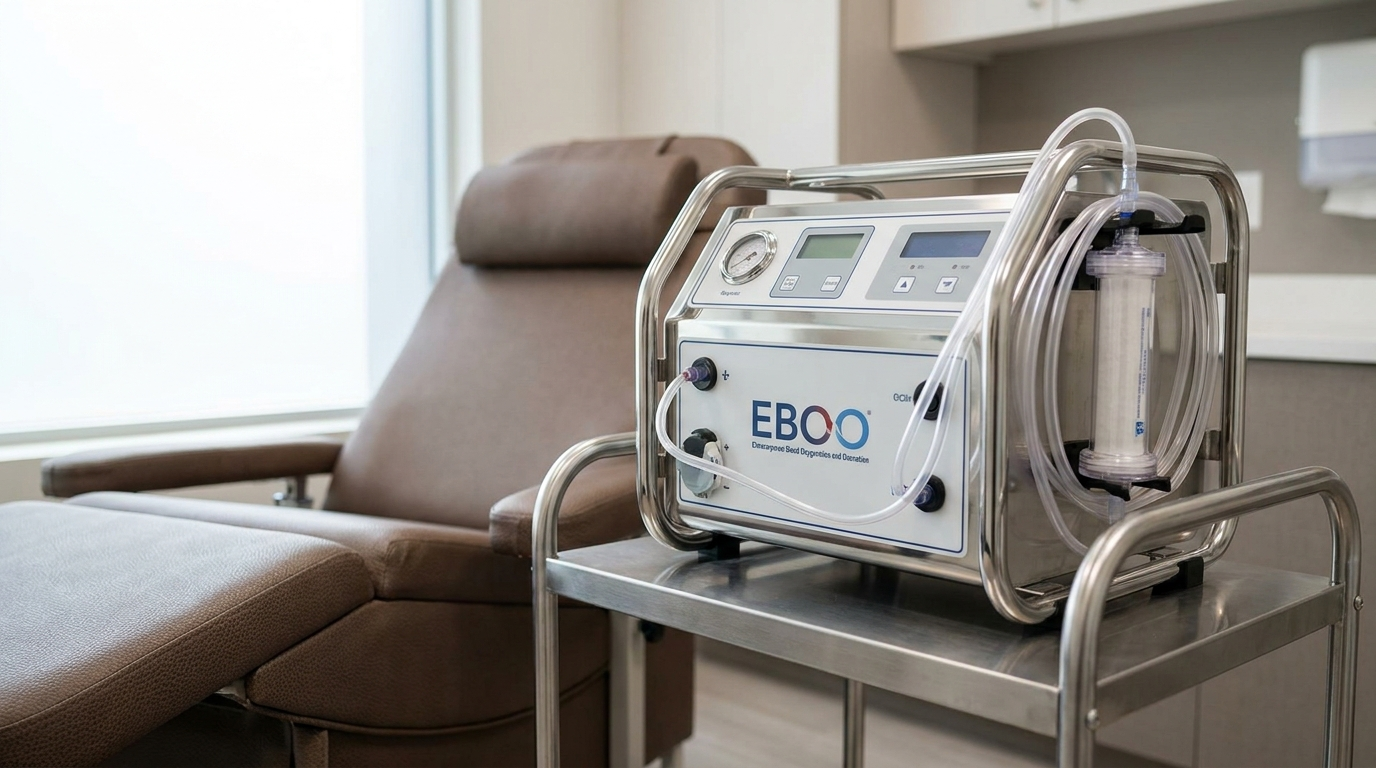
Standard major autohemotherapy (the older, more studied ozone technique) mixes a small volume of withdrawn blood — often 100–200 mL — with ozone gas in a bag, then reinfuses it. EBOO is different in scale: blood is drawn continuously through a machine (often adapted dialysis or apheresis equipment), passed through an oxygenator/ozonator column that bubbles an ozone-oxygen mixture through it, filtered, and returned — with claims of processing several times a patient's total blood volume in a single 1.5–2 hour session. The pitch is that this produces more ozone-blood contact and a bigger physiological effect than the older bag method. That scale-up is a plausible engineering idea, but plausible engineering ideas are not the same thing as clinical evidence, and this is where the trail of EBOO-specific human data goes cold.
What does the human trial literature actually show?
This is the part that matters most, and it's worth being blunt about it: there is no registered, peer-reviewed randomized controlled trial of EBOO specifically that we could find in PubMed or ClinicalTrials.gov as of this writing. What exists are small, uncontrolled case series published by practitioners who perform the procedure — for example, reports on EBOO in patients with peripheral arterial disease or chronic conditions, typically involving a few dozen patients at most, no blinding, no placebo/sham-apheresis arm, and outcomes often self-reported (symptom scores, quality-of-life questionnaires) rather than hard endpoints like mortality, amputation rate, or validated imaging changes.
By contrast, ozone therapy in general (the bag method, rectal insufflation, etc.) has a somewhat larger — though still modest — evidence base. A Cochrane-style look at ozone therapy for various conditions (e.g., diabetic foot ulcers) has found low-quality, heterogeneous trials with inconsistent results; some show modest wound-healing benefits, others show no difference from standard care. None of that literature used the EBOO apheresis-style delivery method, so it doesn't transfer cleanly. The gap between "ozone might do something in some contexts" and "EBOO specifically, as delivered in a med-spa or longevity clinic, does something reliable" is exactly where the evidence is thinnest.
Are there safety concerns with EBOO?
Major autohemotherapy has a reasonably long safety track record at the doses typically used, though ozone is a respiratory irritant and must never be administered directly into the bloodstream as a gas (this has caused fatal air/gas embolism in rare documented cases when protocols weren't followed — the FDA has explicitly warned that ozone has no proven medical use and carries injury risk when misapplied). EBOO's apheresis-style circuit adds the usual risks of any extracorporeal blood procedure: vascular access complications, infection risk from an indwelling line, anticoagulation-related bleeding, and equipment-related hemolysis if the ozonation column isn't properly calibrated. Because EBOO is delivered through non-FDA-cleared devices repurposed from dialysis or apheresis use, there's no standardized safety monitoring across clinics the way there would be for an approved procedure — dosing, contact time, and blood flow rates vary by provider, which makes cross-clinic outcome comparisons close to meaningless.
How does EBOO compare to standard ozone (major autohemotherapy)?
Both share the same theoretical mechanism — brief, controlled oxidative stress from ozone reacting with blood lipids and proteins, which may upregulate antioxidant enzymes (superoxide dismutase, glutathione peroxidase) and modestly affect inflammatory signaling. EBOO's selling point is dose and scale: more blood contact per session, in theory, means a bigger signal. But bigger theoretical dose doesn't automatically mean bigger clinical benefit — and without controlled trials, we simply don't know whether EBOO outperforms standard autohemotherapy, matches it, or adds risk without added benefit. If you're choosing between the two based on marketing claims of "more powerful," know that this specific comparison hasn't been tested head-to-head in a real trial.
FAQ
Q: Is EBOO FDA-approved?
A: No. No ozone therapy delivery method, including EBOO, has FDA approval for any medical indication. The FDA's position is that ozone has no proven therapeutic value at concentrations doctors could use without causing harm.
Q: Is EBOO the same as ozone sauna or ozone insufflation?
A: No — those are different delivery routes (topical/rectal exposure) with their own separate, and also thin, evidence bases. EBOO is specifically the extracorporeal blood-circuit method.
Q: Could EBOO still turn out to work once someone runs a real trial?
A: It's possible — the mechanism isn't absurd, and hormetic oxidative-stress responses are a real biological phenomenon studied in other contexts (like exercise). But "possible mechanism plus uncontrolled case reports" is exactly the definition of thin evidence, not promising evidence. The next real step would be a randomized, sham-apheresis-controlled trial with hard clinical endpoints.
Q: Why do clinics charge so much for something with so little trial data?
A: Because it's marketed as a wellness/longevity procedure rather than a regulated medical treatment, EBOO sits outside the FDA approval pathway that would normally require phase II/III trials before a price tag and clinical claims. That's not proof it doesn't work — but it does mean the burden of proof hasn't been met, and the price isn't evidence of efficacy.
Sources
- FDA: Ozone Therapy — Don't Be Fooled
- Ozone therapy: A clinical review (mechanistic and clinical overview)
- Effects of ozone therapy on oxidative stress markers in human blood
- Cochrane review: Ozone therapy for treating foot ulcers in people with diabetes
Medical Disclaimer
This content is for informational purposes only and is not a substitute for professional medical advice, diagnosis, or treatment. Always consult a qualified healthcare provider before making any health-related decisions or using any treatments discussed herein, including EBOO or any ozone-based procedure. Results vary by individual, and in this case, controlled human data on results is itself extremely limited.
of Stuff
The evidence, in your inbox. No sponsored placements inside a verdict, ever.