Does whole-body cryotherapy actually do anything?
TL;DR
Whole-body cryotherapy (WBC) has a modest, mostly short-lived effect on perceived muscle soreness after exercise, but the evidence for meaningfully reducing objective inflammation markers or speeding actual muscle repair is weak and inconsistent. A 2015 Cochrane review of WBC for post-exercise recovery, led by Costello and colleagues, found low-quality evidence and could not confidently recommend it over cheaper alternatives like cold-water immersion. If you enjoy how it feels afterward, that's a legitimate reason to keep doing it — just don't expect it to be doing much at the cellular level that a cold shower or ice bath doesn't also do.
How is whole-body cryotherapy supposed to work?
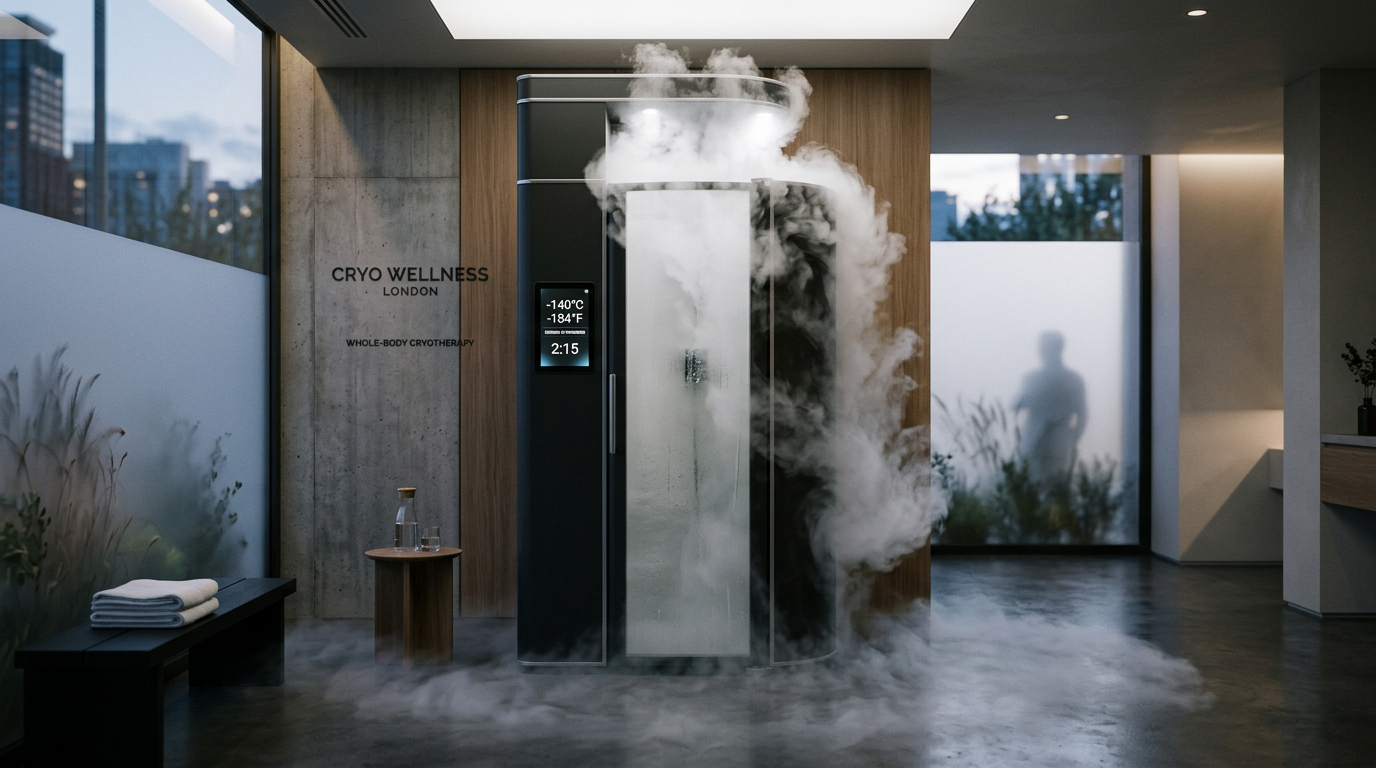
The pitch is straightforward: you stand in a chamber cooled with liquid nitrogen or refrigerated air, usually between -110°C and -140°C, for two to four minutes. The extreme cold is supposed to trigger vasoconstriction at the skin's surface, which theoretically reduces swelling and slows the inflammatory cascade that follows intense exercise or muscle damage. When you step out, rewarming causes vasodilation, which proponents say flushes out metabolic byproducts and speeds recovery.
It's a plausible mechanism — cold therapy in general does affect blood flow and nerve conduction velocity. The question is whether whole-body exposure at those temperatures, for that short a duration, actually penetrates deep enough to change what's happening in the muscle tissue itself, versus just numbing the skin and nerve endings enough that soreness feels less intense.
What does the research actually show?
The most-cited systematic look at this is the 2015 Cochrane review by Costello et al., "Whole-body cryotherapy (extreme cold air exposure) for preventing and treating muscle soreness after exercise in adults," which pooled data from four small trials. The authors found that WBC produced a small reduction in self-reported muscle soreness compared to passive rest, but rated the certainty of evidence as very low, largely because the studies were small, inconsistently designed, and none blinded participants (which is genuinely hard to do with a -110°C chamber).
On inflammation specifically, a study by Pournot and colleagues in PLOS ONE (2011) measured cytokine levels after WBC in rugby players and found some short-term shifts in markers like IL-6, but the effects were transient and didn't clearly translate into faster functional recovery on measures like jump height or sprint times. Other trials comparing WBC directly to cold-water immersion — which costs approximately nothing compared to a cryo session — have generally found the two are roughly equivalent, or that cold water performs at least as well.
A more recent narrative review in Frontiers in Physiology by Bleakley and colleagues echoed the same conclusion the field keeps arriving at: cryotherapy interventions broadly (not just WBC) show inconsistent effects on inflammatory biomarkers, and any recovery benefit is more reliably explained by reduced pain perception than by resolved tissue damage.
Are there risks or limitations to know about?
WBC is generally well-tolerated in healthy adults when run by a trained operator, but it's not risk-free. Case reports have documented frostbite, and there have been rare but serious incidents, including a fatality at a U.S. cryotherapy spa in 2015 tied to nitrogen asphyxiation in an unsupervised chamber — a reminder that this is an industrial-grade cold exposure, not a spa treatment in the relaxing sense. People with cardiovascular conditions, uncontrolled hypertension, or cold sensitivities like Raynaud's are typically advised against it, since the sudden vasoconstriction puts real stress on the cardiovascular system.
The other limitation is more mundane: cost and access. A single session commonly runs $30–$90, and the studies showing any benefit used repeated sessions over days, not a one-off. If you're chasing the same soreness relief, a bag of ice or a cold bath gets you most of the way there for the price of your tap water.
FAQ
Q: Is whole-body cryotherapy better than an ice bath for recovery?
A: The evidence doesn't clearly favor one over the other. Trials comparing them directly tend to find similar effects on soreness, and cold-water immersion has more research behind it overall, per the Cochrane review's discussion of comparator interventions.
Q: Can cryotherapy reduce inflammation from injuries, not just workouts?
A: Most research focuses on exercise-induced soreness (DOMS), not clinical injury or chronic inflammatory conditions. There isn't strong evidence it treats inflammatory disease processes — talk to a doctor before using it for a diagnosed condition rather than post-workout soreness.
Q: How many sessions do you need before seeing an effect?
A: Studies showing modest soreness reduction typically used multiple sessions across several consecutive days, not a single visit. One-off sessions before a big event are unlikely to do much.
Q: Is it safe to do cryotherapy every day?
A: There's no strong long-term safety data on daily use in healthy people. Given the cardiovascular stress involved, most protocols in the research used it on consecutive but limited days (often 3–5), not indefinitely.
Sources
- Costello JT, et al. "Whole-body cryotherapy (extreme cold air exposure) for preventing and treating muscle soreness after exercise in adults." Cochrane Database of Systematic Reviews, 2015.
- Pournot H, et al. "Time-course of changes in inflammatory response after whole-body cryotherapy multi exposures following severe exercise." PLOS ONE, 2011.
- Bleakley CM, et al. "Cold-water immersion (cryotherapy) for preventing and treating muscle soreness after exercise." Cochrane Database of Systematic Reviews (related review).
Medical Disclaimer
This content is for informational purposes only and is not a substitute for professional medical advice, diagnosis, or treatment. Always consult a qualified healthcare provider before making any health-related decisions or using any treatments discussed herein, particularly if you have cardiovascular disease, cold sensitivity disorders, or other relevant medical conditions. Results vary by individual.
of Stuff
The evidence, in your inbox. No sponsored placements inside a verdict, ever.