Is microneedling worth it for skin texture and scars?
TL;DR
Microneedling has genuine clinical evidence behind it for atrophic acne scars and general skin texture, with randomized trials showing meaningful improvement over 3–6 months of repeated sessions. The effect size is real but moderate — think "visibly smoother, less pitted," not "scars gone." It works best combined with other treatments (like PRP or radiofrequency) rather than as a standalone fix, and results depend heavily on needle depth, session count, and who's holding the device. For deep or boxcar scars, it's a supporting player, not the whole treatment plan.
How does microneedling actually improve scars and texture?
The mechanism is controlled injury. A device drives fine needles (typically 0.5–2.5mm depending on the area and goal) through the epidermis into the upper dermis, creating thousands of microscopic wound channels. This triggers the same cascade your skin uses for any injury: platelet release, inflammatory signaling, fibroblast activation, and — over the following weeks — new collagen and elastin deposition. Researchers call this "collagen induction therapy," and it's the same rationale behind lasers and chemical peels, just via mechanical rather than thermal or chemical injury.
What's specific to microneedling is that it largely spares the epidermis (unlike ablative lasers), which is why downtime is shorter and it's considered safer across a wider range of skin tones — a real advantage for darker skin, where thermal treatments carry higher hyperpigmentation risk.
What does the clinical trial evidence actually show?
The most-cited controlled data comes from acne scar research. A split-face randomized trial by El-Domyati et al. (2009) found significant increases in dermal collagen and elastin on biopsy after a series of microneedling sessions, with histological confirmation — not just patient-reported improvement, which matters because self-assessed "glow" is notoriously unreliable.
For acne scarring specifically, a randomized controlled trial published in Dermatologic Surgery comparing microneedling to other modalities found meaningful improvement in scar severity scores after multiple sessions, typically 3–6 treatments spaced a month apart. A systematic review in the Journal of Cosmetic Dermatology concluded microneedling is effective for atrophic acne scars but noted that study quality varies a lot — sample sizes are often small (20–40 patients), blinding is inconsistent, and many trials are short-term without long-term follow-up on collagen durability.
Where the evidence gets more compelling is combination therapy. Several trials show microneedling plus platelet-rich plasma (PRP) or plus radiofrequency outperforms microneedling alone for scar depth reduction. That's a meaningful nuance the marketing on standalone devices tends to skip.
Are there risks or people who shouldn't do this?
Microneedling is generally well-tolerated, but it's not risk-free. Post-inflammatory hyperpigmentation is the most common complaint, especially in medium-to-dark skin tones or with aggressive needle depth. Infection risk exists if the device or skin isn't properly prepped — this is one reason at-home rollers (usually 0.25–0.5mm) carry more contamination risk relative to benefit than professional treatments done with sterile, single-use cartridges. Active acne, eczema flares, or isotretinoin use in the prior 6 months are typically contraindications a dermatologist will screen for. And it's not appropriate for keloid-prone skin, where any controlled injury can trigger overgrown scarring instead of remodeling.
How does microneedling compare to other scar and texture treatments?
Compared to ablative fractional lasers (like CO2), microneedling generally shows smaller improvements but with far less downtime and lower risk of pigment changes — a reasonable trade for many people, especially those with darker skin. Compared to chemical peels, it addresses textural and volume changes rather than surface pigmentation, so they're often complementary rather than competing. Compared to microdermabrasion, which only affects the very outer skin layer, microneedling reaches deeper and produces more durable collagen change — but also more downtime and higher price per session.
FAQ
Q: How many sessions does it actually take to see a difference?
A: Most trial protocols use 3–6 sessions spaced 4–6 weeks apart. Visible improvement in texture often starts around session 2–3, with collagen remodeling continuing for months after the last session.
Q: Are at-home microneedling rollers worth buying?
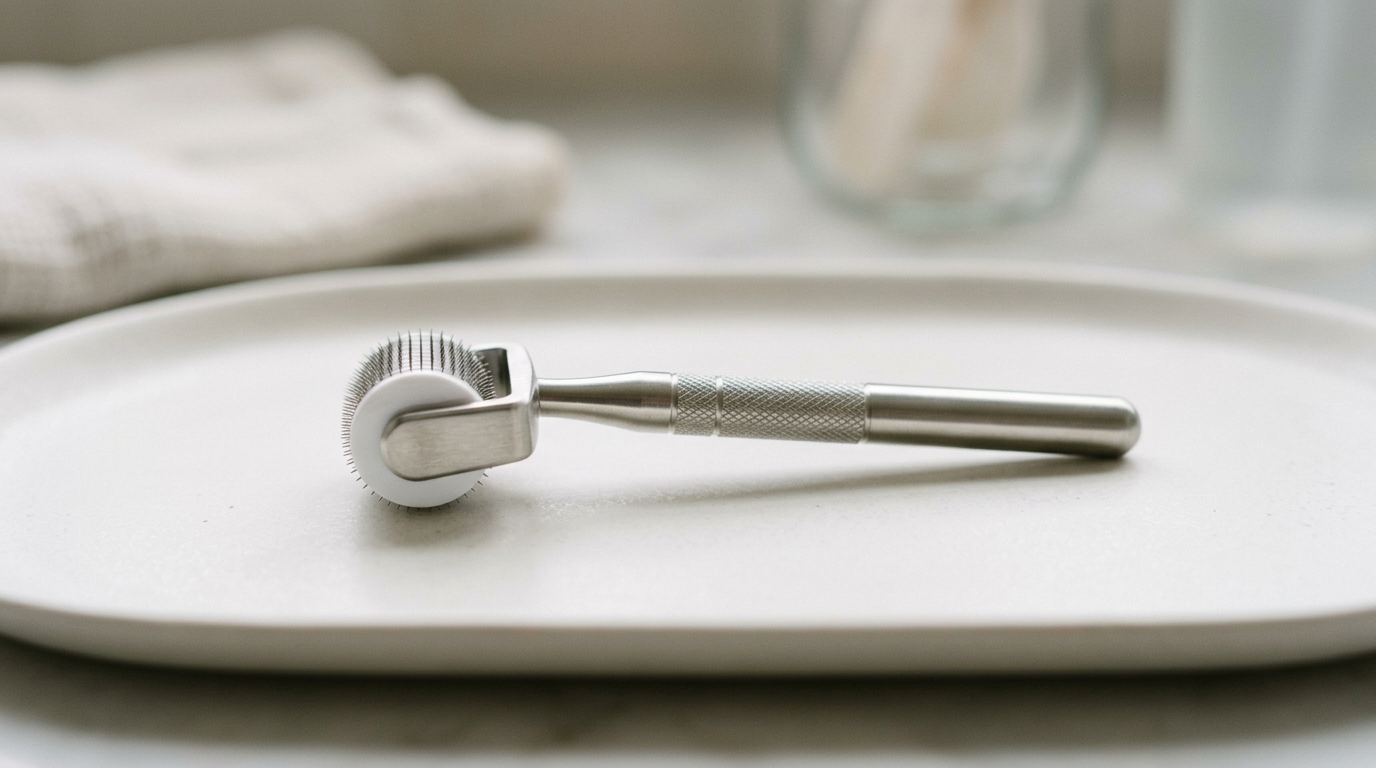
A: They're not nothing, but the needle depth (usually under 0.5mm) is too shallow to reach the dermal remodeling zone that professional devices target. They may help with product absorption and mild texture, but don't expect scar-level results, and be scrupulous about sanitizing them to avoid infection.
Q: Does microneedling hurt, and what's the downtime?
A: With topical numbing cream, most people describe it as uncomfortable rather than painful. Expect redness for 1–3 days, similar to a moderate sunburn, and makeup is usually fine again by day 2–3.
Q: Is it better than laser resurfacing for acne scars?
A: Not necessarily "better" — it's a different risk-benefit trade. Lasers often produce more dramatic single-session results but carry higher risk of pigment changes and longer downtime. Microneedling is the gentler, more gradual option, and frequently used alongside lasers rather than instead of them.
Sources
- El-Domyati M, et al. "Multiple microneedling sessions for minimally invasive facial rejuvenation." Journal of Cosmetic Dermatology, 2009.
- Randomized controlled trial on microneedling for acne scars, Dermatologic Surgery.
- Systematic review: microneedling for atrophic acne scars, Journal of Cosmetic Dermatology.
Medical Disclaimer
This content is for informational purposes only and is not a substitute for professional medical advice, diagnosis, or treatment. Always consult a qualified healthcare provider before making any health-related decisions or using any treatments discussed herein. Results vary by individual.
of Stuff
The evidence, in your inbox. No sponsored placements inside a verdict, ever.